

 0
0 Every few months, someone rings the bell again: “SEO is dead.” We’ve heard it with every major Google update – Panda, Penguin, Mobile-First Indexing, the rise of zero-click SERPs. Each time, the fear spreads among website owners, particularly those managing their online presence with WordPress, wondering if their efforts are suddenly obsolete.
And now, with the rapid ascent of AI Overviews (formerly SGE) and generative AI dominating search results, the chorus is louder than ever. But let’s be clear: SEO isn’t dead; it’s simply evolved. The fundamental goal of connecting users with the most relevant, high-quality information hasn’t changed.
What has changed is how search engines, now powered by increasingly sophisticated AI, understand, process, and present that information. This shift isn’t a death sentence for SEO; it’s actually an exciting invitation to level up your strategy.
For WordPress users, this means adapting your strategy to leverage new tools and focus on core principles that have always mattered, now more than ever. It’s about moving beyond old tactics and embracing a more intelligent, user-centric approach that AI algorithms are designed to reward.
Quick Navigation
SEO Is Not Dead: It Continuously Evolves
SEO is very much alive and kicking. What’s actually dying is outdated SEO – the keyword stuffing, the shady backlinks, the one-size-fits-all hacks. Today’s SEO is smarter, more human, and deeply connected to user intent and experience. Learn more about why SEO is not dead from the following sections.
A. The Never-Ending Debate for SEO
Every few years, someone sounds the alarm that SEO is dead. You have probably seen it before. A tweet goes viral. A blog post claims the end is near. A new Google update rolls out, and suddenly everyone is writing death notices.
The pattern is familiar. Each major shift in the search landscape triggers another wave of panic. We saw it with Google’s Panda and Penguin updates. We saw it again when mobile-first indexing became a thing. And now, it is happening all over again with zero-click searches and AI-generated answers showing up at the top of Google.
For WordPress site owners, this constant cycle of fear is exhausting. Every algorithm change feels like a threat. Rankings dip. Traffic drops. Forum threads fill with doom. But in reality, most of these updates are not SEO killers. They are wake-up calls.
B. The Latest Panic Button: AI Overviews and Generative Search
Right now, the fear has a new face. Google’s AI Overviews (formerly SGE) and generative AI in search results have made many believe that SEO is over. Why write blog posts if AI can just summarize everything at the top of the page?
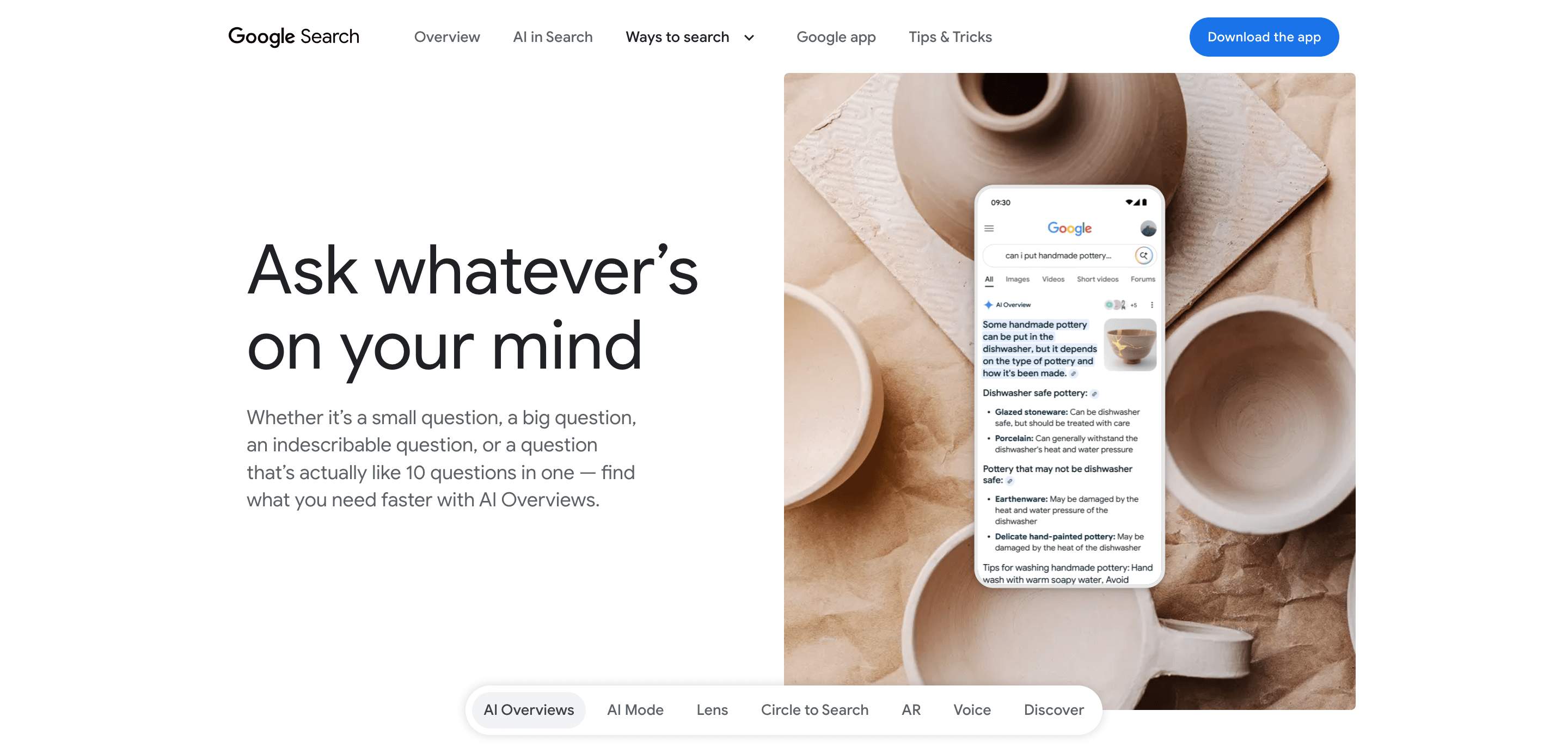
Here is the truth. AI is changing how search results look. But it is not removing the need for content or SEO. It is simply reshaping how content is discovered and presented. If anything, it is making search smarter and more user-focused.
AI tools like Google’s Gemini or ChatGPT are trained on vast content ecosystems. They still need original, high-quality content to draw from. That means your website, your blog, your videos still matter. What is changing is how clearly your content communicates value, structure, and credibility.
So no, AI is not killing SEO. It is highlighting the need for better SEO.
C. The Truth: SEO Did Not Die. It Got Smarter
Old-school SEO was all about outsmarting the algorithm. You stuffed keywords. You built sketchy backlinks. You played games with metadata. And sometimes, it worked.
Today, that approach is useless. SEO has matured. Search engines are not looking for tricks. They are looking for content that genuinely helps people. That means understanding what users want, organizing your content clearly, and proving that you are a trustworthy source.
Modern SEO is not just about ranking. It is about relevance. It is about experience. It is about building a site that deserves to show up, whether in traditional search results or AI-generated summaries.
Smart SEO in 2025 and Beyond: What Really Moves the Needle
SEO is no longer about chasing algorithms. It’s about understanding people. Google is prioritizing intent, trust, and experience over clever tricks. AI is rewriting the way content gets discovered. Have a look at what still works.
A. Stop Chasing Keywords – Start Solving User Intent
First things first. Get rid of the idea of following keywords everywhere. Let’s break down what you need to do instead.
1. Conversational Search and How AI Understands Meaning
Search engines are no longer just matching keywords. They are reading between the lines. With algorithms like RankBrain, BERT, and MUM, Google now understands context, tone, and even vague or multi-part questions.
That means someone might type “best WordPress SEO plugin” or say “what’s the easiest way to improve my WordPress site for search,” and Google will deliver similar answers. Because it knows what the person is really looking for.
Your content should follow that same logic. Instead of forcing exact phrases, write like a human. Address the real questions your audience has. Think beyond what people type and focus on what they mean.
SEO plugins like Yoast and Rank Math now offer insights beyond basic keyword optimization. They help you craft content that answers user questions and matches search intent. On WP Hive, you can compare these tools side by side to see which fits your strategy best.
2. Build Topic Authority with Content Hubs
Google favors websites that demonstrate depth. One-off blog posts are not enough anymore. You need interconnected content that covers a topic from multiple angles.
This is where topic clusters come in. You start with a core page, often called a pillar page. Then you build supporting articles that dive into related questions. Link them together. Guide your readers deeper into the subject.
The result? You show expertise. You boost internal linking. And you help search engines understand your site structure and authority on that topic.
B. Technical SEO: The Hidden Hero of AI-Era Rankings
Beyond the content, there is something more you should look up to. That’s technical SEO.
1. Speed Matters More Than Ever: Core Web Vitals in Focus
Google has made it clear. A slow site won’t rank well. Core Web Vitals like Largest Contentful Paint (LCP), Cumulative Layout Shift (CLS), First Input Delay (FID), and Interaction to Next Paint (INP) are now central to how your site is judged.
These metrics measure load time, visual stability, and responsiveness. Even if your content is brilliant, poor performance can drag down your rankings.
WordPress performance depends on your theme, plugins, and hosting. WP Hive tracks plugin impact on speed, so you can choose caching tools like LiteSpeed Cache, WP Super Cache, or image optimizers like Smush and Imagify with confidence.
2. Schema Markup: Speaking the Language of AI
Structured data tells search engines exactly what your content is about. It is like giving Google a label maker. Want to show up in AI Overviews or rich snippets? You need a schema.
Use it for blog posts, products, FAQs, how-to guides, videos, reviews, and more. The clearer your structure, the more likely your content is to surface in featured results or get cited by AI tools.
3. Make Sure Search Engines Can Crawl and Index You
Crawlability and indexability are often overlooked. If Google cannot access or understand your content, it does not matter how great it is.
Use XML sitemaps. Set up your robots.txt correctly. Avoid duplicate content. Check your canonical tags. And test your site often.
C. E-E-A-T: Your Trust Signal in an AI-Powered World
While AI can write a blog post in minutes, you still need that final touch of a seasoned writer to make it read like a useful piece of writing. And Google’s EEAT is the metric that evaluates the quality of an article.
1. Why Trust Matters More Than Ever
AI has changed how Google organizes information, but it hasn’t changed what it values most. Trust still wins. That’s where E-E-A-T comes in: Experience, Expertise, Authoritativeness, and Trustworthiness.
This framework helps Google decide which content deserves to show up, especially in sensitive spaces like health, finance, education, or legal advice. These are known as YMYL (Your Money or Your Life) niches. If your site touches on them, trust signals are non-negotiable.
Even outside those areas, Google and AI tools tend to pull information from brands, creators, and websites that have proven themselves over time. So, it’s not just what you say, it’s who you are and how you back it up.
2. Show E-E-A-T Across Your WordPress Site
You don’t need to be a celebrity or a PhD to build credibility. You just need to show your work and demonstrate real-world value.
Start with your author bio. Make it detailed. Add credentials, background, and links to social profiles. Use an author box plugin to make it consistent across posts.
Cite reputable sources in your content. Link both internally and externally. Create an “About” page that explains who you are and why your site exists. Add a contact page, privacy policy, and terms of service.
If you publish reviews, make sure they include actual user experiences, star ratings, or screenshots. Add schema markup so search engines understand that it’s a review. These little touches add up.
D. Make UX the Secret Weapon of SEO
Google doesn’t just care about what your site says. It also watches how people interact with it. If visitors bounce, struggle to navigate, or get stuck waiting for things to load, your rankings will suffer, no matter how good your content is.
That’s why user experience (UX) is no longer optional. In the AI-powered SEO world, it’s a ranking factor hiding in plain sight.
1. Mobile-First and Page Experience Go Hand in Hand
Over half of web traffic comes from mobile. If your site doesn’t load fast or display correctly on smaller screens, users leave. And search engines notice.
But it’s not just about responsive design anymore. Your mobile experience must be smooth, stable, and fast. That includes passing Core Web Vitals, avoiding layout shifts, and eliminating unnecessary popups or slow-loading elements.
2. Keep Visitors Engaged With Interactive Content
Time on site and engagement signals tell Google (and AI models) that users find your content helpful. That is where rich, interactive elements shine.
Use videos to explain complex ideas. Add quizzes, calculators, or sliders where relevant. Turn data into infographics. The more engaging the experience, the better your SEO outcome.
3. Guide Users With Clear Navigation and Smart Linking
A cluttered menu or confusing layout frustrates users. It also confuses search engines. You want your most important content to be easy to find, both for people and for bots.
Keep your navigation simple. Use breadcrumbs. Make your site’s internal structure easy to follow. And add contextual internal links within your content to related posts, product pages, or key resources.
Your WordPress SEO Toolbox to Win the SEO Game
Smart SEO requires smart tools. But with thousands of WordPress plugins out there, picking the right one can feel overwhelming. One wrong choice and you risk slowing down your site, clashing with your theme, or missing out on essential features.
That’s where your toolbox comes in. These are the categories every modern WordPress site should cover to stay ahead in search, from rankings to speed, structure, and trust.
Use this table as your go-to reference, and rely on WP Hive to compare performance, memory usage, and real user experiences before you install anything.
Essential SEO Plugins for Smarter Optimization
| Function | Top Plugins | Why It Matters |
|---|---|---|
| SEO Optimization | Rank Math, Yoast SEO, SEOPress | Add meta titles, descriptions, XML sitemaps, and schema in one place. |
| Speed Optimization | LiteSpeed Cache, WP Super Cache, FlyingPress | Improve Core Web Vitals and reduce load times – crucial for rankings and UX. |
| Image Optimization | Smush, Imagify, ShortPixel | Compress images without sacrificing quality to boost page speed. |
| Structured Data (Schema) | Schema Pro, Rank Math, SEOPress Schema | Help search engines understand your content for rich results and AI summaries. |
| Internal Linking | Link Whisper, Internal Link Juicer | Build contextual links automatically and boost topical authority. |
| Analytics & Tracking | Google Site Kit, MonsterInsights | Monitor traffic, user behavior, and keyword performance without code. |
| Security & Trust | Wordfence, Sucuri | Secure your site to build trust with visitors and search engines alike. |
| Backups & Recovery | UpdraftPlus, Jetpack Backup | Protect your content and rankings with reliable restore options. |
Each of these plugins can be evaluated in seconds on WP Hive. Want to know which one has the lowest memory usage? Which performs better under pressure? WP Hive’s performance tab gives you answers before you hit install.
This toolbox isn’t just a checklist. It’s your SEO safety net. Use it to build a site that’s optimized from top to bottom, without the guesswork.
What Not to Do – Common SEO Mistakes to Avoid
Sometimes, it’s not what you do. It’s what you unknowingly keep doing wrong. A lot of well-meaning site owners are still clinging to outdated tactics that no longer work, or worse, actively hurt their SEO. Before you add anything new, check that you’re not falling into these traps.
1. Stuffing Keywords Like It’s 2010
Keyword density still matters, but not at the cost of clarity or user experience. Repeating the same phrase twenty times doesn’t help your ranking. It makes your content unreadable.
Smarter alternative: Focus on semantic relevance. Use synonyms, answer real questions, and optimize for intent.
2. Relying on AI-Generated Content Without Oversight
AI can help you write faster, but it can’t replace human insight. Content that reads like a generic chatbot response won’t stand out in search and might even get flagged.
Smarter alternative: Use AI to brainstorm, outline, or speed up drafting. But always add your expertise, examples, and voice.
3. Ignoring Page Speed and Mobile Performance
A beautiful site means nothing if it takes five seconds to load or breaks on mobile. Slow pages hurt both rankings and conversions.
Smarter alternative: Test your site with PageSpeed Insights. Optimize images. Use caching. Choose lightweight plugins and themes.
4. Forgetting to Add Schema Markup
Without structured data, Google has to guess what your content is about. That means you’re missing out on rich results, featured snippets, and AI citations.
Smarter alternative: Use schema plugins to add structured data to posts, products, reviews, and more.
5. Skipping Internal Linking
If your content lives in isolation, both users and search engines will have a hard time navigating it. You’re not building authority. You’re building silos.
Smarter alternative: Add contextual internal links in every post. Link related articles. Use pillar pages and topic clusters.
6. Trusting That Every Plugin Plays Nice
Some plugins clash with others. Some overwrites your SEO settings. Some block search bots without warning.
Smarter alternative: Always test and monitor what you install. Focus on conflict detection and expert insights before making a decision.
Adapting Your WordPress SEO Strategy in the Coming Years
You don’t need to start from scratch. You just need to update how you think about SEO. The fundamentals still matter, but now they need to work hand in hand with AI, performance, and human-centered content.
Here’s how to realign your WordPress strategy for the smarter, faster, more competitive world of modern search.
A. Let AI Assist, But Keep the Human Touch
AI is a powerful tool. Use it to generate ideas, create outlines, and even speed up your first drafts. But don’t stop there. What makes your content stand out is what you bring to it: your voice, your experience, your insight.
AI can suggest. Only you can connect.
Best practice: Use AI to save time, not to take over. Everything that goes live should be reviewed, fact-checked, and rewritten in your own tone.
B. Build Original, Helpful Content That Actually Solves Problems
Google’s Helpful Content guidelines have raised the bar. Thin, keyword-stuffed posts won’t rank anymore, especially not in an AI-powered SERP.
To stand out, your content needs to:
- Answer real questions
- Offer unique insight or experience
- Be easy to read and navigate
- Link to trustworthy sources
- Include visual or interactive elements where possible
C. Use Plugins and Themes That Align With Modern SEO
Your tools matter. From caching and security to schema and analytics, your plugins shape how well your site performs in search.
Use plugins that are:
- Actively maintained
- Compatible with your theme and other tools
- Lightweight and fast
- Aligned with current SEO standards
D. Diversify Your Search Presence Beyond Google
Google may dominate search, but it’s not the only place people discover content anymore.
- YouTube SEO: Optimize video titles, descriptions, tags, and transcripts.
- Pinterest and Visual Search: Use descriptive file names, alt text, and image schema.
- AI-first platforms: Tools like Perplexity and ChatGPT’s Browse feature pull from high-quality content. If your pages are optimized for clarity and credibility, you stand a better chance of being cited.
The best SEO strategy today is a balanced one. You need tools that perform, content that delivers value, and a system that grows with you, not against you.
The Future of SEO Is GEO: Get Your Content AI-Ready
Let’s face the truth. Ranking on Google isn’t just about keywords or backlinks. It’s about how well your content answers real questions in real time. That’s where Generative Engine Optimization (GEO) steps in.
With AI-powered search results pulling answers directly into chat-like boxes, your content needs to work harder to be seen and trusted. Smart SEO today means optimizing not just for humans and bots, but for AI systems that summarize, filter, and even rewrite your message before anyone clicks.
This section dives into what really works now. If you’re still thinking old-school SEO, you’re already falling behind. Let’s fix that.
When you give a prompt for an AI tool, it doesn’t search the web primarily. Instead, it relies on patterns learned from its training data. So, most of the time, you’re getting answers based on what the model already knows, not a live search.
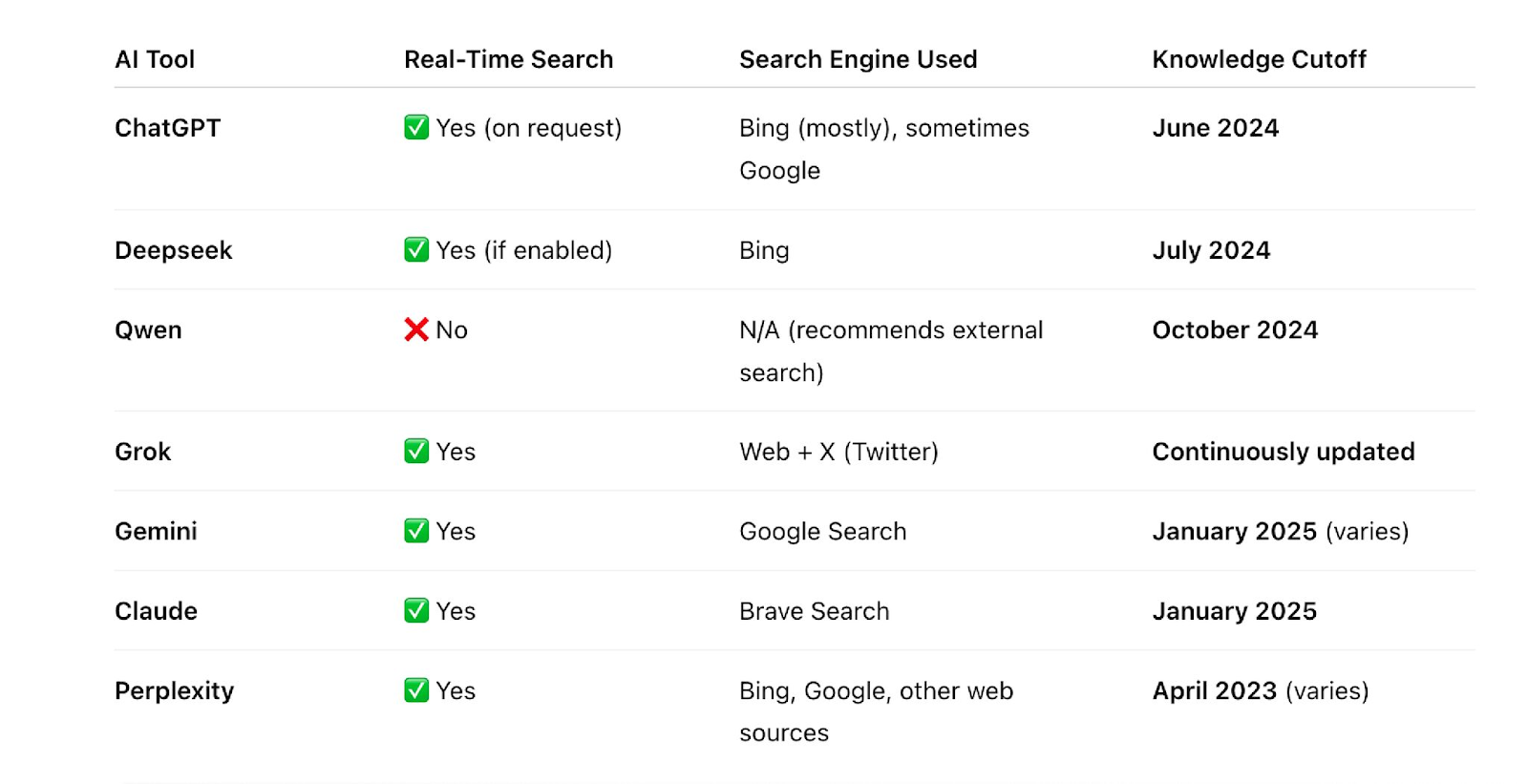
Publishing clear, trustworthy content early increases your chances of being included in future training sets. And many AI tools now have real-time search ability and use Bing the most, so we should aim to rank higher on Bing, along with Google. Let’s blend the two findings from the following table:
| AI doesn’t rank like search engines | Tools like ChatGPT, Gemini, Claude, and Grok give you direct answers or summaries instead of ranked link lists. |
| High-ranking pages increase the chances | Top search results are more likely to be used because they’re usually authoritative. But AI doesn’t care only about rank. It prefers content that’s clear, relevant, and informative. |
Takeaway: Chase SEO rankings, but also focus on clear headings, bullet points, and concise paragraphs to make content easily parsable by AI.
Actionable tips for GEO (Generative Engine Optimization)
Optimize for Brand Recognition
AI models rely on recognizing trusted brands, people, and products. To boost your brand’s chances of being cited, add organization schema to your site and list your business on Google Business Profile, Bing Places, and more. Syndicate content to LinkedIn, Reddit, and Medium, and aim to appear in “Best of” listicles. Increase brand searches through ads or job postings to enhance AI visibility.
Show Real Experience (E-E-A-T)
Share insights only someone with hands-on knowledge would know. Cite trusted sources, highlight author credentials, and support claims with real data.
Answer Questions Upfront
Lead with the takeaway. After a heading, give a short, clear, direct answer, just like a featured snippet. Make it easy for AI to grab.
Use Schema Markup
Add structured data (like FAQ, HowTo, or Article schema) so AI can quickly understand your content’s purpose and format.
Challenge: The metrics for GEO are still harder to quantify. This means that it is more difficult to determine their effectiveness and ROI.
WordPress and WP Hive Are Ready for This Smarter SEO World
WordPress offers unmatched flexibility to implement every advanced SEO strategy, from speed optimization to schema markup to E-E-A-T signals. With thousands of plugins and themes, the key is choosing the right ones.
That is where WP Hive comes in. Our independent reviews, detailed performance data, and other analyses empower you to pick tools that boost your SEO, without slowing your site or creating headaches.
WP Hive is your partner to stay informed, stay optimized, and stay ahead.
Your Turn: Ready to Embrace Smarter SEO?
Take a moment to audit your site using the principles we’ve covered. Check your speed, review your content, verify your schema, and update your internal linking. Explore WP Hive for plugin comparisons and theme reviews that help you implement these changes with confidence.
Most importantly, share your experience. What SEO myth did you believe until recently? What’s your best “aha” moment about SEO in the AI era? Drop your thoughts in the comments below. Let’s learn and grow together.



 Email Subscription Request


Add your first comment to this post